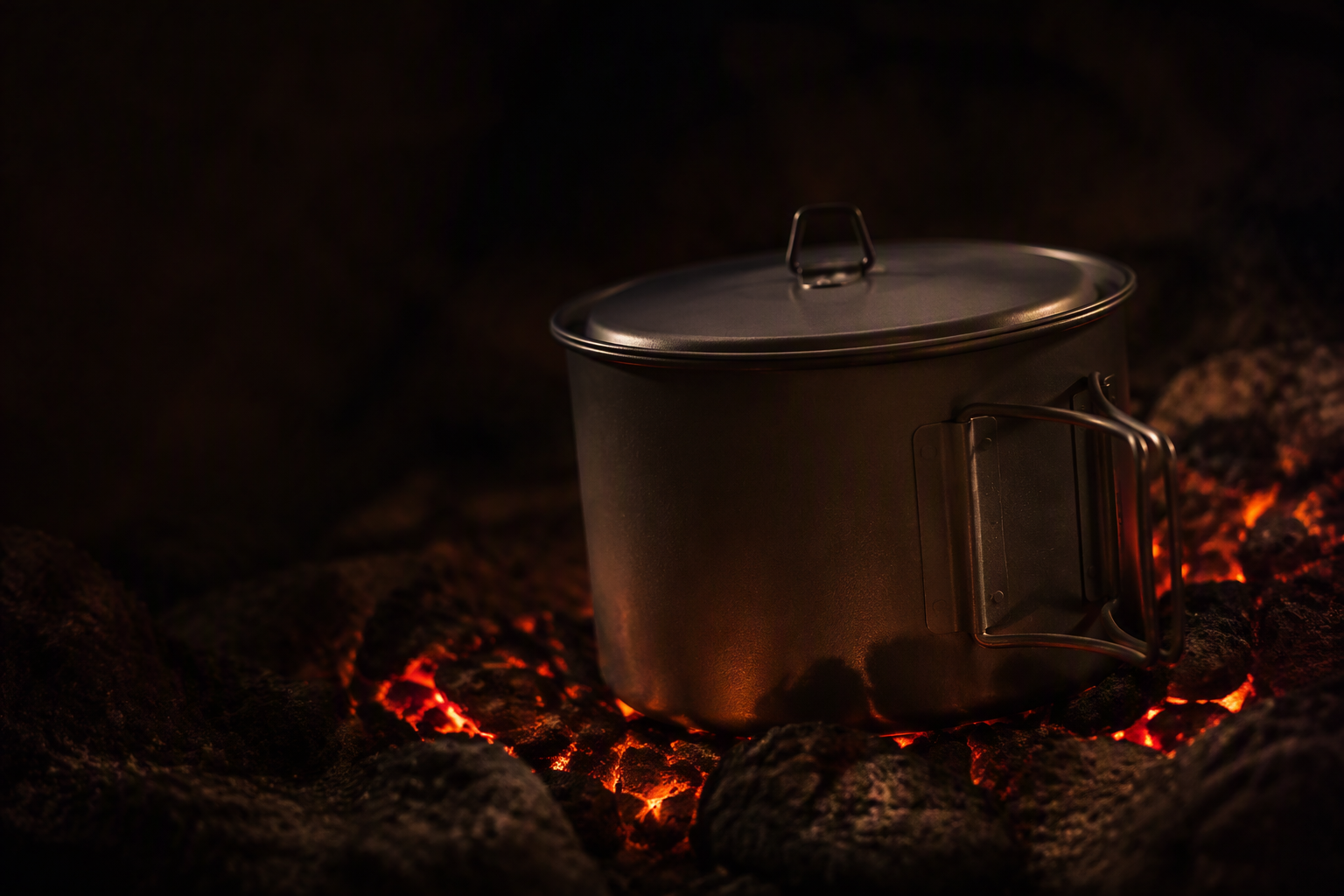
Titanium camp cookware is a high-margin category, but only if you source it well. A bad batch of pots — wrong thickness, off-spec anodizing, sloppy welds — erases your margin in returns. Here is the checklist we use with our own importers.
1. Define the spec before you talk price
Write down material grade (commercially pure titanium, typically grade 1 for cookware), wall thickness, capacity, finish (brushed or anodized), handle design and packaging. Suppliers price differently on every one of these — a vague RFQ gets you a quote you cannot compare.
2. Sample before you commit
Always order samples before bulk. Check wall thickness with calipers, boil water, look at weld seams and anodizing consistency. A reputable supplier ships samples in 5–10 days and applies the sample cost to your first order.
3. Verify material and finish quality
Ask for material certificates and a photo of the production run before shipment. For anodized items, confirm the color tolerance across batches — iridescent finishes vary if the anodizing bath conditions drift. Photo-inspection of finished goods is standard practice with serious suppliers.
4. Negotiate MOQ and OEM terms
MOQ from 5 pieces per SKU lets you test the market without filling a warehouse. For OEM / ODM, agree on logo, packaging, cartons and any spec changes in writing, and confirm how sample iterations are priced.
5. Plan freight and lead time
In-stock items usually ship within 72 hours; bulk production runs take longer. DHL, FedEx and UPS suit samples and small orders; air and sea freight suit containers. FOB, CIF and DDP options are all available from Baoji.
Want prices, samples or a custom titanium line?
MOQ from 5 pcs, ships within 72 hours, replies within 24 hours.