Titanium cookware is safe for food contact because the material itself is chemically inert and carries no coating to flake off. The questions worth asking are narrower: which grade, how was the colour applied, and how thin is the wall. Those three answers decide whether a piece performs in a commercial kitchen or fails in the first month.
Is titanium cookware safe for food contact?
Yes. Commercially pure titanium is chemically inert, which is why the same family of material is used for surgical implants and dental fixtures. It does not react with acidic food, it does not carry a plating or non-stick layer that can chip into a meal, and it contains no nickel - the metal that most often triggers contact allergy concerns in cookware.
That is the material argument. The practical argument is that titanium also has no metallic aftertaste, so coffee, tea and tomato-based dishes taste like themselves rather than like the vessel.
What does Grade 1 (TA1) actually change?
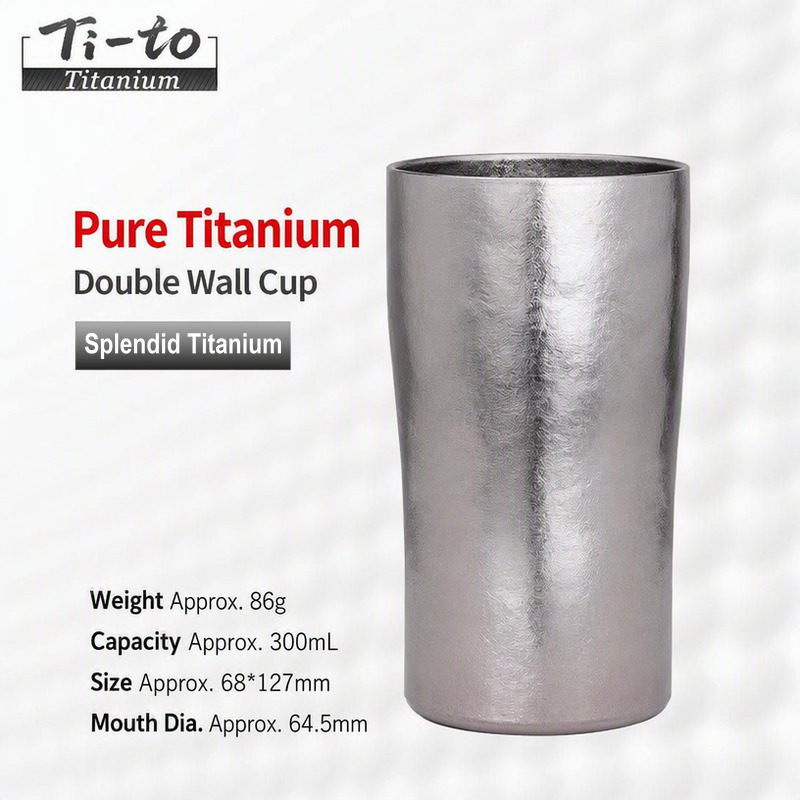
Grade 1, also written TA1, is the purest commercial grade of titanium: the lowest oxygen and alloy content, the most ductile, and the most formable. Tableware and drinkware are made from it because it presses and spins cleanly into thin walls without cracking.
Grade 5 (Ti-6Al-4V) is the alloy used in aerospace fasteners. It contains aluminium and vanadium and is harder to form. If a supplier cannot tell you which grade they are shipping, that is the first thing to fix - not the price.
Is anodized titanium safe to eat from?
Anodized colour on titanium is not paint or dye. The colour comes from a controlled oxide layer grown electrically on the metal surface, and the layer is part of the metal rather than something sitting on top of it. Blue, gold, purple and rainbow finishes made this way are food-safe and do not leach colour into food.
The contrast worth remembering is coated aluminium, where a coloured layer is applied over a reactive base metal. With anodized titanium there is no applied layer to peel.
What can still go wrong in daily use?
Safety is not the weak point - handling is. Thin titanium transfers heat almost instantly, so a single-wall cup without a handle needs a grip or a cloth. Uncoated titanium will brown food faster than a non-stick pan at the same heat. Abrasive scouring pads dull a polished or anodized finish, and a double-wall vessel should never go over an open flame.
Titanium is dishwasher-safe, stain-free and odor-free, which is why it holds up in shared kitchens and rental fleets where nobody is careful.
What should a buyer put on the spec sheet?
Ask for four lines in writing: the grade (TA1), the wall thickness, the finish (polished, sandblasted or anodized), and the food-contact statement. Then check a physical sample before a bulk run.
Every piece in this catalogue is Grade 1 (TA1) pure titanium with no coating. Samples ship in 5-10 days, MOQ is 5 pieces per SKU, and laser marking carries your brand. Send the volume and the channel on WhatsApp and we will confirm the piece.
Want prices, samples or a custom titanium line?
MOQ from 5 pcs, ships within 72 hours, replies within 24 hours.