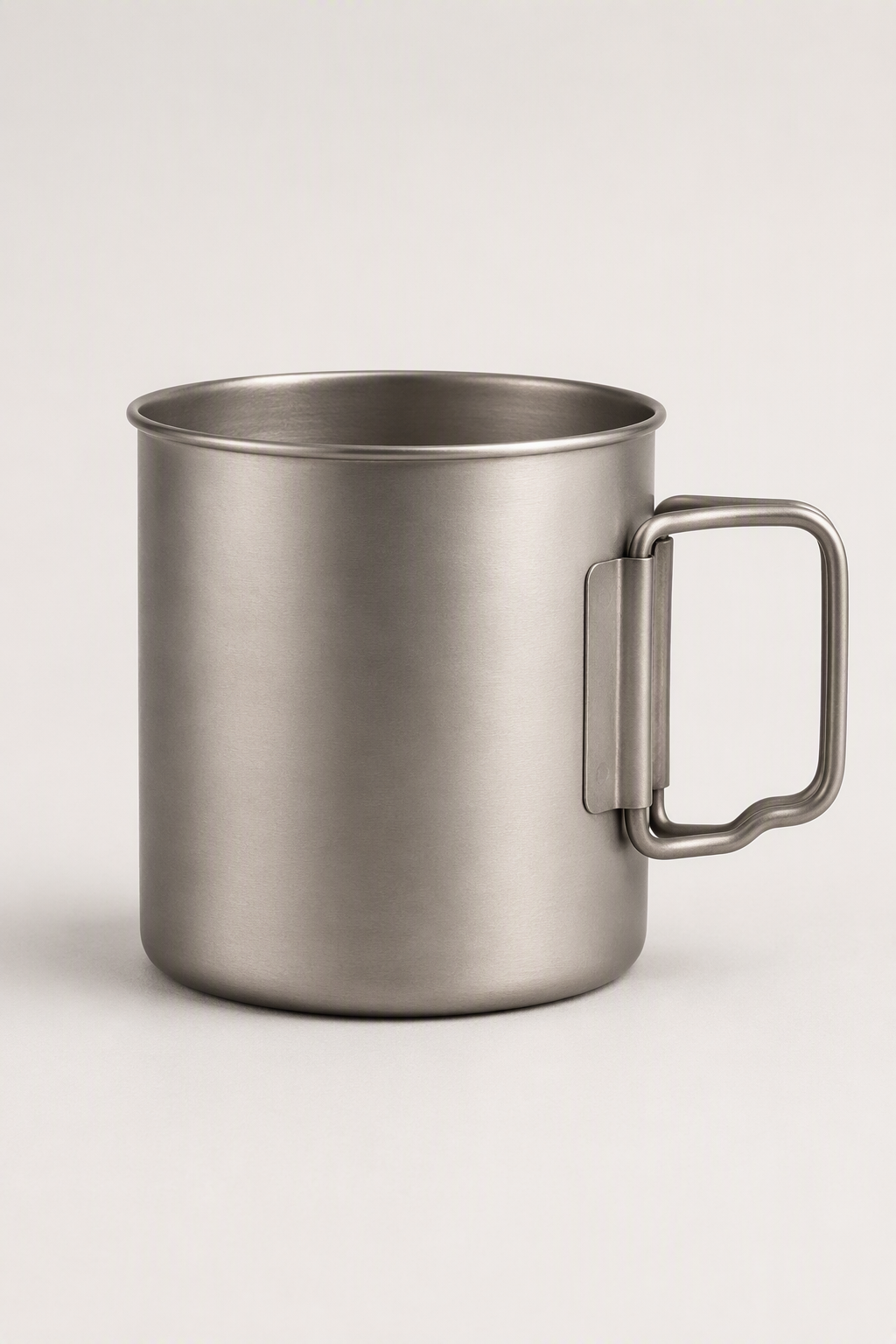
The rainbow mugs and gold fork-spoons are the most photographed pieces in any titanium lineup — and the most asked-about. Are the colors painted on? Do they wear off? Are they safe? Here is the short answer: anodizing is electricity, not paint, and the color is just light playing on the metal's surface.
What anodizing actually is
Anodizing grows a thin oxide layer on titanium using an electric current in an electrolyte bath. The oxide layer is transparent; the color you see is light reflecting off and through it — the same physics as an oil slick on water. No dyes, no paint, no coatings are involved.
How the colors are made
Different voltages create different oxide thicknesses, which produce different colors: low voltage gives gold and bronze, mid voltage gives blue and purple, and higher voltages create green, pink and the full rainbow gradient. A single rainbow piece simply moves the piece through the bath at varying voltage — which is why every rainbow piece is subtly unique.
Is it food-safe and durable?
Yes. The oxide layer is chemically inert and food-safe — it is the same titanium, just with a different surface structure. It is durable enough for daily use, but scratches will show the silver titanium underneath, and heavy wear can dull the finish. It is cosmetic, not protective: the metal is what protects you.
What it means when you buy
Color is a marketing and design decision, not a quality signal — a plain brushed mug is the same material as a rainbow one. Retailers use anodized pieces as premium visual anchors; wholesalers often mix a few colorful SKUs into an otherwise brushed lineup. Just confirm color tolerance with your supplier, because batch-to-batch variation is normal.
Want prices, samples or a custom titanium line?
MOQ from 5 pcs, ships within 72 hours, replies within 24 hours.