Titanium is easy to live with, but it behaves differently from steel and aluminium - most after-sales questions come from that gap. Here is what is normal, what is damage, and what to tell customers.
Does titanium discolour? Yes - and it is not corrosion
Titanium develops a heat tint: over a flame the surface oxide layer thickens and the metal takes on straw, gold, violet or rainbow tones. It is not rust and not a failed finish - the metal underneath is unchanged, still rust-proof and still tasteless.
The same oxide layer is what makes every anodized SKU in this range possible. It is grown electrically rather than painted on, which is why anodized colour cannot flake off into food the way a coating can.
Hard-water spots are the other common complaint. They are mineral deposits sitting on the surface, not staining the metal, and they come off with a mild acid rinse.
What genuinely damages titanium - and what does not
Avoid chlorinated cleaners and bleach. Titanium resists most chemistry, but chlorine is the one thing worth keeping away from it. Also skip steel wool and abrasive scouring powders: grade 1 is hard, but an abrasive pad still dulls a natural or sandblasted finish and leaves the marks that become visible under kitchen light.
Titanium is not microwave-safe because it is metal, and there is no reason to season it like cast iron: the surface is not porous, so burnt-on oil simply becomes a stain you then have to remove.
One honest caveat for the anodized SKUs - direct, prolonged flame heat will shift an anodized tone, usually toward gold or violet. The colour never peels, but it does move. For a pot that lives on a fire, the sandblasted or natural finish is the version to recommend.
Everyday cleaning and the dishwasher question
Uncoated grade 1 titanium is dishwasher safe. There is no liner and no coating to attack, which is the practical advantage of buying bare titanium rather than a coated pan.
For burnt-on food, simmer water in the vessel for a few minutes to lift it, then wipe with a soft sponge and a mild detergent. For hard-water film, rinse with a little vinegar or lemon juice and dry. Drying after washing is the single habit that keeps a natural finish looking new.
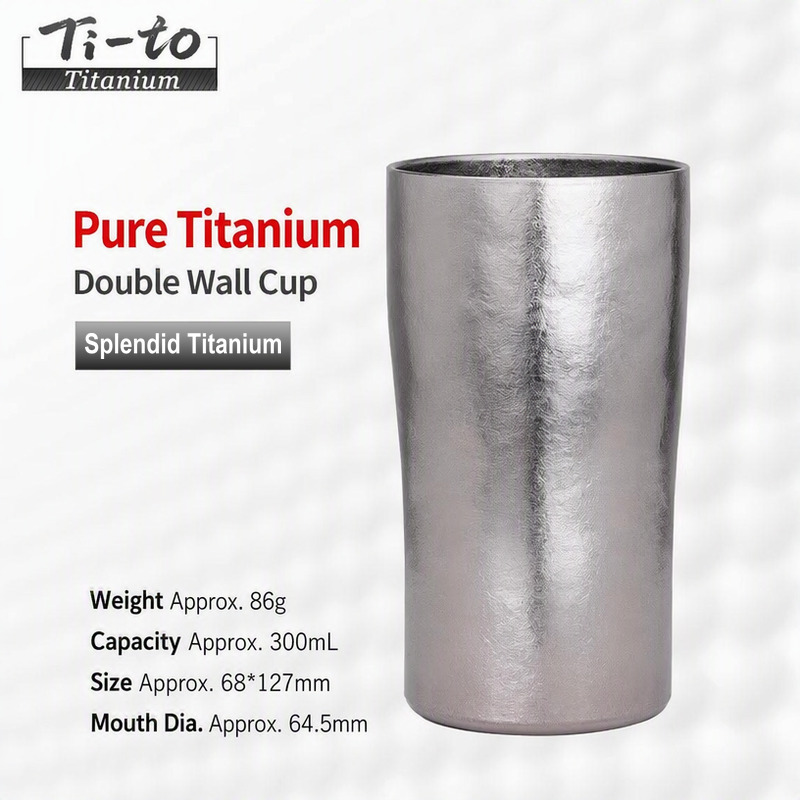
The same routine covers the whole drinkware range, from the 300 ml double-wall cup at 86 g to the sandblasted 600 ml mug at 147 g: no liner, no coating, no special product needed.
Why this matters to buyers
Care information is a return-reduction tool. Most complaints we hear are heat tint and water spots - both normal, and both resolved by a two-line care card before they become a support ticket.
Custom packaging can include that care card, and anodized SKUs should carry the heat-shift note on the label. MOQ starts at 5 pieces per SKU, samples ship in 5-10 days, and orders from our Baoji facility leave within 72 hours; laser engraving and printed inserts are available. Tell us which finishes you are stocking on WhatsApp and we will send the matching care wording in English for your packaging.
Want prices, samples or a custom titanium line?
MOQ from 5 pcs, ships within 72 hours, replies within 24 hours.